


Plastic Granule Mixing / Color Consistency
Plastic Color Mixer Selection for Resin Pellet Blending
For processors balancing base resin, masterbatch, additives, and recycled material, Alicia's AT-150V gives a practical reference point when choosing a plastic color mixer supplier or comparing support from a resin pellet mixer supplier.
Use the model details, mixing checks, and Alicia article topics below to prepare a clearer inquiry around batch volume, pellet condition, power supply, and downstream molding or extrusion requirements.

Model Fit
AT-150V Details to Confirm Before an Inquiry
The AT-150V is positioned for plastic granules, color masterbatch, new and recycled material blends, and auxiliary preparation before injection molding, extrusion, blow molding, modification, or product production.
| Model | AT-150V |
|---|---|
| Voltage | 220V / 380V / 440V, 50Hz-60Hz, 3PH |
| Mixing capacity | 150 kg per batch |
| Rotate speed | 65 r/min |
| Machine dimension | 1125 x 1105 x 1420 mm |
| Machine weight | 270 kg |
| Warranty | 1 year warranty plus lifetime technical service support |
| Certification | CE |
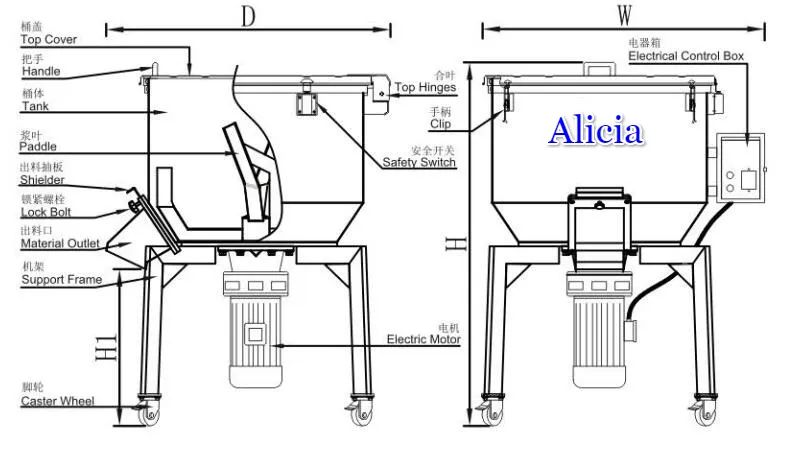
Where the mixer sits in the line
It prepares a uniform premix of resin pellets, masterbatch, fillers, and additives before the material moves into molding, extrusion, or blow molding equipment.
Blending Checks
Match the Mixer to the Way Your Pellets Behave
Color stability depends on more than nominal capacity. Confirm the recipe, pellet condition, cleaning needs, and process rhythm before locking the final mixer setup.
Recipe Complexity
Use the number of resin, masterbatch, filler, and additive components to judge whether the blend needs simple batch mixing or tighter multi-component control.
Pellet Protection
For pellets that scratch, dust, or break easily, controlled rotation and smooth contact surfaces help maintain feed stability in the next machine.
Cleaning Rhythm
Frequent color changes make low-adhesion interiors important, especially when sticky PVC, TPR, or additive-rich materials are part of production.
Moisture Control
For PA, PET, or recycled streams, ask whether temperature control or dehumidification should be included with the mixing configuration.

Process Priorities
Turn Process Priorities Into Mixer Requirements
The strongest mixer fit usually depends on how evenly the color disperses, how dosing affects waste, how pellets hold up during rotation, and how the machine supports different production scales.
- Uniformity: Target over 95% mixing uniformity when the recipe combines multiple material streams.
- Low breakage: The product content references a low-speed, soft-contact structure with pellet breakage below 0.1%.
- Interior options: Teflon coating or polished 304/316 stainless steel can reduce adhesion and simplify cleaning.
- Optional controls: Temperature and dehumidification options are relevant when moisture affects the finished plastic part
Three Alicia Reads for Color and Pellet Mixing Decisions
Refine the technical questions behind color variation, masterbatch dosing, pellet breakage, and material-range planning.

Streamline Color Mixing
Clarify how uniform blending supports color consistency and smoother downstream injection, extrusion, or blow molding output.
Read Color Mixer Role
Control Output Consistency
Focus the inquiry around masterbatch dosing, material waste, pellet integrity, and stable qualification rates.
Read Mixer Advantages
Plan Material Versatility
Check how resin type, additives, recycled material, temperature control, and moisture management affect the suitable mixer setup.
Read Granule Mixer SelectionInquiry Preparation
Details That Help Alicia Match the Mixer Setup
A clear inquiry lets the supplier compare capacity, power, material behavior, and cleaning needs before confirming a final machine configuration.
Resin and additive mix
List PP, PE, ABS, PA, PET, recycled material, masterbatch, filler, or functional additive requirements.
Batch rhythm
Share target kilograms per batch, number of batches per shift, and whether trial or mass production is planned.
Power and space
Confirm voltage, phase, frequency, available floor space, and installation constraints around the mixer.
Cleaning and drying
Note whether low-adhesion interiors, stainless steel contact surfaces, heating, or dehumidification are needed.
FAQ
Common Questions About AT-150V Mixer Selection
What materials can the AT-150V plastic color mixer handle?
The mixer is suited to plastic granules, color masterbatch, and mixed new and recycled materials, including common base resins such as PP, PE, and ABS.
What batch size should be planned around this model?
The listed AT-150V model has a mixing capacity of 150 kg per batch, so batch planning should match that working volume and the number of material components in the recipe.
Which power supply details should be checked before ordering?
Available power options include 220V, 380V, and 440V at 50-60Hz, 3PH. Confirm the plant power supply before requesting a final configuration.
Why does mixing speed matter for resin pellets?
The listed 65 r/min rotation supports controlled blending while helping limit pellet damage, which matters when pellets must feed smoothly into molding or extrusion equipment.
Can the mixer support moisture-sensitive materials?
Optional temperature control and dehumidification can support materials such as PA and PET, so moisture-sensitive applications should be discussed during configuration.
What should be included in a mixer inquiry?
Share resin type, masterbatch or additive ratio, batch volume, target downstream process, plant voltage, and whether drying, dehumidification, or easy-clean interiors are needed.


