A linear plastic vibrating screen combines the linear reciprocating vibration of a linear screen with the corrosion-resistant plastic structure of a plastic screen. It is specifically designed for screening acidic, alkaline, or high-purity materials that cannot come into contact with metal.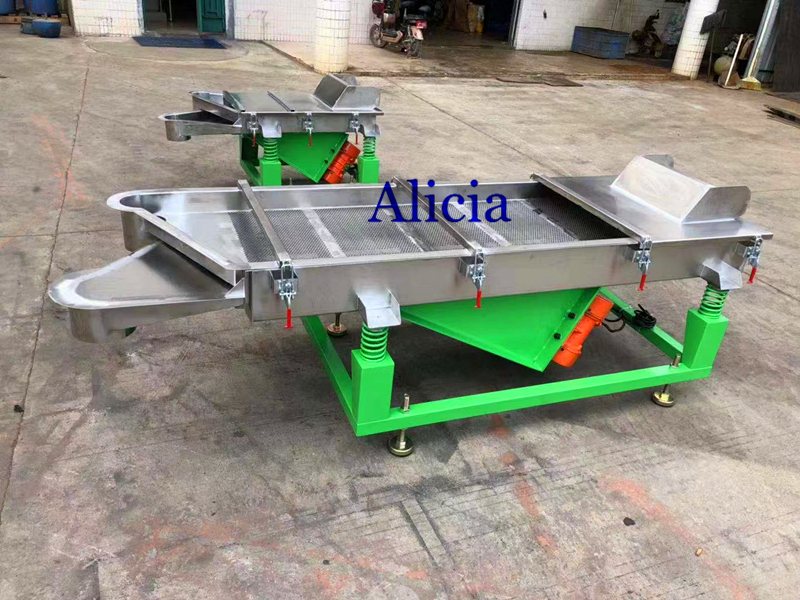 Specifications for vibrating screen
Output: 300 kg/h
The size of the area with holes: length 940mm, width 370mm [count the top 440mm], overall width 600mm, length 1.3 meters
Material: 304 stainless steel plate
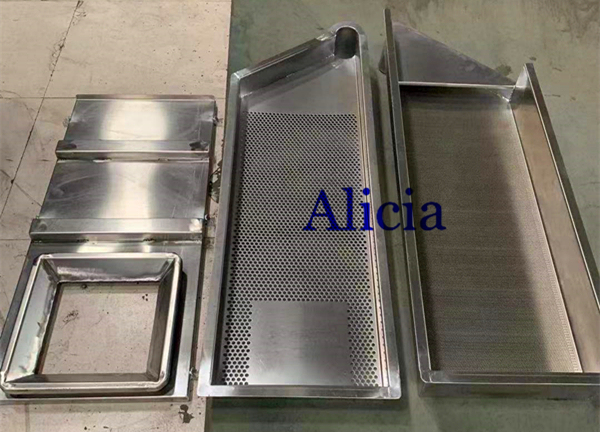
The first layer of mesh 8mm
The second layer 2.0mm
Thickness 1.5mm
Motor 0.12kw Voltage: 380V/3phase/50hz
The feed inlet is 60 cm above the ground (adjustable range +-8 cm) Machine weight: 120KG
Core Structure & Working Principle
1. Key Components of linear plastic vibrating screen
- Plastic Screen Frame: Made of corrosion-resistant plastics such as polypropylene (PP) or polyvinyl chloride (PVC), it avoids material contamination and metal corrosion.
- Vibrating Motor: Two symmetrically installed motors rotate in opposite directions to generate linear vibration force, driving the screen surface to move back and forth.
- Plastic Screen Mesh: Optional in different meshes (10–500 mesh), made of plastic or nylon to match the screen frame and prevent material adhesion.
- Vibration Damping Device: Usually composed of rubber springs, it reduces the transmission of vibration to the ground and ensures stable operation.
2. Working Principle of linear plastic vibrating screen
- Materials are evenly fed onto the plastic screen surface through the feed port.
- The vibrating motor drives the screen frame to produce linear reciprocating vibration along the material flow direction.
- Materials move forward in a jumping manner on the screen: fine particles pass through the screen mesh (undersize material), while coarse particles or impurities are discharged from the end of the screen (oversize material), completing the screening process.
Core Advantages of linear plastic vibrating screen
- Strong Corrosion Resistance: The all-plastic (or main plastic) structure resists erosion from acids, alkalis, and organic solvents, which is irreplaceable by traditional metal linear screens.
- No Material Contamination: Plastic materials do not react with the screened materials, making them suitable for high-purity scenarios such as food and pharmaceuticals.
- High Throughput: Inheriting the linear vibration design, it ensures materials move quickly and continuously, with higher processing capacity than circular plastic screens.
- Good Adaptability to Sticky Materials: The smooth surface of plastic is not easy to adhere to wet or sticky materials (such as chemical slurries), reducing screen blockage and material waste.
Typical Application Scenarios of linear plastic vibrating screen
It is mainly used in industries that require both large-volume screening and corrosion resistance/purity control:
- Chemical Industry: Screening acidic/alkaline powders (e.g., ammonium sulfate, sodium hydroxide), chemical slurries, and resin particles.
- Food Industry: Filtering high-moisture materials (e.g., fruit pulp, soy milk) or corrosive materials (e.g., pickled products, vinegar-containing mixtures).
- Pharmaceutical Industry: Screening pharmaceutical intermediates, herbal extracts, and API (Active Pharmaceutical Ingredient) powders to meet GMP purity standards.
- Environmental Protection: Treating acidic/alkaline wastewater sludge, desulfurization gypsum, and other environmentally friendly materials.
Key Considerations for Selection of linear plastic vibrating screen
- Material Corrosiveness: Confirm the acidity/alkalinity of the material to select the appropriate plastic material (e.g., PP for strong acids, PVC for weak alkalis).
- Screening Precision: Choose the screen mesh size according to the required particle size (e.g., 50 mesh for coarse screening of chemical powders, 300 mesh for fine screening of pharmaceutical powders).
- Throughput Requirements: Select the screen width and length based on the daily processing volume.


