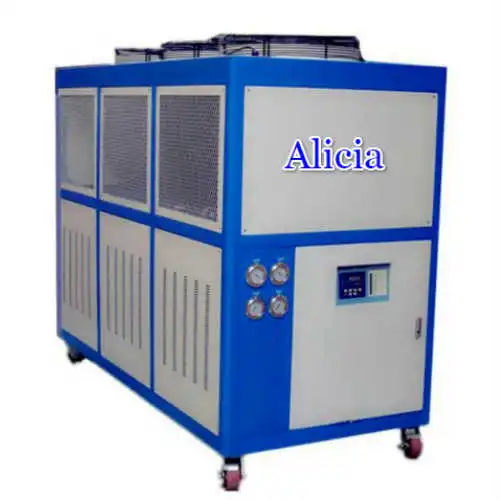
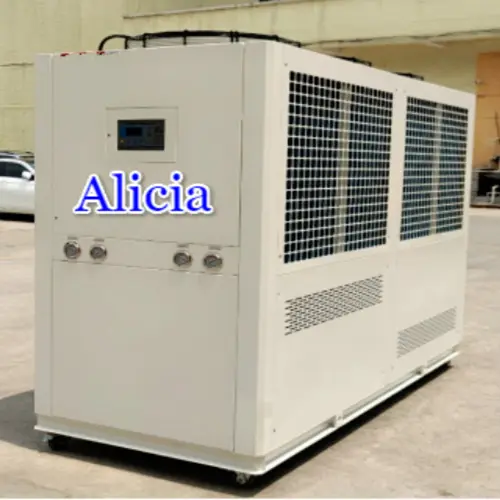
Air-cooled chillers are core cooling equipment in poultry farms, eliminating the need for cooling towers and water sources. They are used for incubation temperature control, chicken house cooling, and pre-cooling during slaughtering and processing, suitable for water-scarce/outdoor/small- to medium-sized scale farming scenarios.
I. Core Uses (Three Major Scenarios in the Poultry Industry)
Egg Hatching (Most Critical): Incubators/hatchers provide precise temperature control at 37.8℃±0.5℃ and humidity at 50%~60%, improving hatching and chick survival rates.
Closed-loop water circulation cooling with adjustable water temperature from 12~18℃ and PLC automatic temperature control prevents embryo heat stress.
Adult Chicken House Cooling (Summer Survival): In high-density cage-rearing environments (10~15 chickens per square meter), temperatures exceeding 32℃ in summer easily lead to heat stress, reduced egg production, and mortality.
Chicken House Cooling (Summer Survival) Chiller + fan/evaporative cooling pad combination, temperature control at 26~30℃, reducing mortality and increasing egg production/weight gain.
Slaughtering and processing pre-cooling (food safety): Rapidly cools carcasses to **≤7℃ (viscera ≤3℃)**, inhibiting bacteria, reducing weight loss, and extending shelf life.
Direct air cooling (2~4℃ cold air) or water cooling bath temperature control (0~4℃), suitable for different processes.
II. Air-cooled chiller vs. Water-cooled chiller (How to choose in poultry farming)
Advantages: No cooling tower/water source required, easy installation, suitable for outdoor use, low maintenance, prevents water shortage shutdowns.
Disadvantages: Slightly reduced efficiency at high temperatures (>40℃), slightly higher noise.
Suitable for: Small to medium-sized farms, water-scarce areas, outdoor hatching/chicken houses, mobile environments.
Advantages: High efficiency, stable operation, suitable for **≥100RT large cooling capacity**.
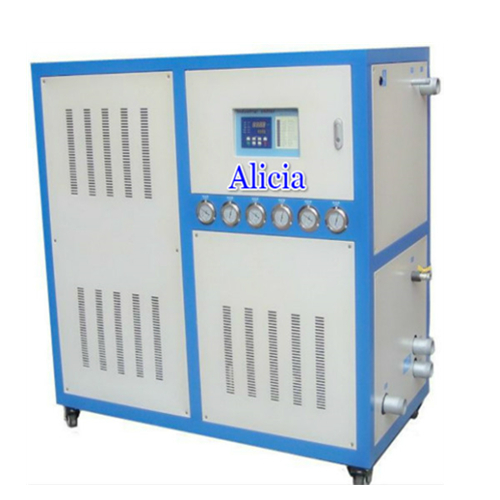
Disadvantages: Requires cooling tower + circulating water, large footprint, dependent on water source, complex maintenance.
Suitable for: Large slaughterhouses, high-density continuous hatching bases.
III. Commonly Used Machine Models and Parameters in Poultry Industry
1. By Compressor (Power Compatibility)
Scroll Type (5~50HP): Small hatcheries/family farms, low noise, energy saving, easy maintenance.
Screw Type (50~300HP): Medium-sized chicken houses/hatcheries, 24-hour continuous operation, high energy efficiency, long lifespan.
Example: 100RT (350kW) air-cooled screw compressor, equipped with 2 Hanbell screw compressors, 12 sets of condenser fans, and Siemens PLC.
2. Key Technical Parameters (Essential for Selection)
Cooling Capacity: 5~300RT (1RT=3.517kW), estimated at 10~15RT per 1000 chickens in the chicken house.
Temperature Control Range: 5~25℃ (12~18℃ for incubation, 18~22℃ for the chicken house).
Power Supply: 380V/50Hz three-phase, outdoor IP54 protection.
Material: 304/316 stainless steel evaporator/piping, corrosion-resistant and easy to clean.
IV. Selection Calculation (3 Steps)
Calculate Heat Load (Chicken House Example)
Formula: Cooling Capacity (kW) = Number of Chickens × Heat Dissipation per Chicken (W) × 1.2 (Margin) ÷ 1000.
Example: 10,000 adult chickens, 15W heat dissipation per chicken → 10,000 × 15 × 1.2 ÷ 1000 = 180kW (approximately 51RT).
Environmental Adaptability:
Summer maximum temperature **>40℃:** Select a high-temperature resistant model or increase cooling capacity by 15%.
Installation: Side exhaust fans should have a spacing of **≥1.5m**, top exhaust fans should be unobstructed to prevent hot air backflow.
Configuration List (Standard):
Main Unit: Air-cooled scroll/screw chiller (with PLC + touchscreen).
Terminal Units: Incubator chilled water coils / Chicken house fans + chilled water piping.
Accessories: Insulated water tank (500~5000L), circulating pump, filter, water softener (anti-scaling).
V. Installation and Maintenance (Extending Lifespan by 3-5 Years)
Installation Points:
Outdoor concrete foundation (load-bearing capacity ≥ 1.5 times the weight of the main unit), well-ventilated and sunny, away from dust/ammonia.
Pipeline insulation (thickness ≥ 20mm) to prevent cold loss and condensation.
Routine Maintenance (Weekly/Monthly):
Weekly: Clean condenser fins (high-pressure water jet low-pressure rinsing), check fan/motor temperature.
Monthly: Replace filter element, check refrigerant pressure, calibrate temperature control probe.
Annually: Professional maintenance (oil change, leak detection, PLC calibration).
VI. Common Problems and Solutions
Problem 1: Insufficient cooling on hot days → Cause: Dust accumulation on fins/hot air recirculation → Solution: Clean fins, improve ventilation.
Problem 2: Large fluctuations in incubation temperature → Cause: Insufficient water tank/insufficient circulation pump flow → Solution: Increase water tank size, replace with a higher flow pump.
Problem 3: High energy consumption → Cause: Long-term full load / Lack of insulation → Solution: Select variable frequency model, ensure proper pipe insulation.
VII. Summary
Poultry industry air-cooled chillers have core advantages such as water-free operation, easy installation, and outdoor suitability, covering all scenarios from hatching and chicken houses to slaughtering. Selection should be based on three steps: heat load + environment + margin. Prioritize scroll (small) / screw (large) chillers, equipped with stainless steel construction and PLC temperature control. Proper installation and maintenance can stabilize temperature control, reduce mortality, and increase production capacity. 



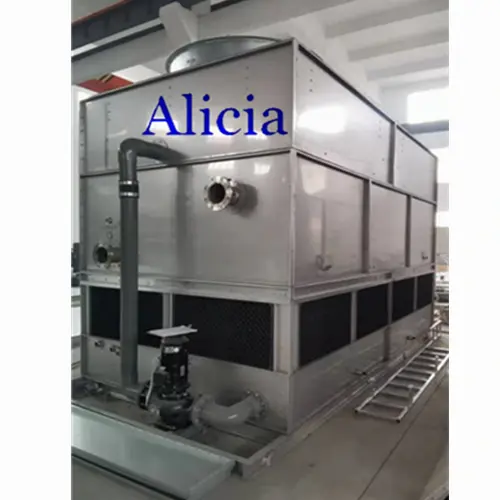 Why are closed-circuit cooling towers needed to make cheese?
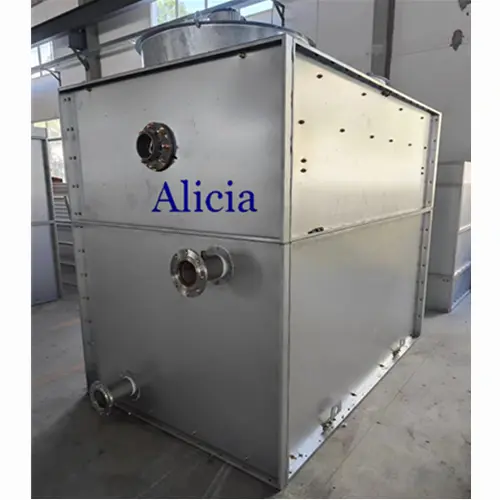 closed-circuit cooling tower systems for process cooling applications
 How are chillers used in the cosmetics manufacturing industry?


