The core functions of industrial water chillers in detergent production are precise temperature control, ensuring reaction stability, cooling materials, protecting equipment, and stabilizing formulations. They cover the entire process from synthesis, ingredient mixing, homogenization to filling/molding, directly determining product stability and yield.
I. Core Process Applications (Liquid/Powder/Soap-Based Detergents)
1. Saponification/Neutralization Reaction Temperature Control (Critical Exothermic Reaction)
Soap-based detergents: The saponification of oils and alkali is highly exothermic. The industrial water chiller supplies 5–15℃ cold water to the reaction vessel jacket/inner coil, controlling the temperature at 60–80℃ to prevent overheating that could lead to yellowing, deterioration of odor, and soap base stratification/hydrolysis.
Liquid detergents (such as laundry liquid): The neutralization/polymerization of surfactants is exothermic. The industrial water chiller controls the temperature at 40–60℃ to prevent surfactant decomposition, abnormal viscosity, pH drift, and decrease in active ingredient content.
Value: Temperature control accuracy ±0.5℃, good batch consistency, 30%+ reduction in side reactions, and ≥95% retention of active ingredients.
2. Ingredient Preparation/Mixing/Homogenization & Cooling:
High-concentration surfactants (e.g., AES, LAS) dissolve exothermically; industrial water chillers rapidly cool to 25–35℃, preventing deactivation/vaporization of heat-sensitive components (enzymes, fragrances, preservatives).
Homogenizer/High-Shear Equipment: High-speed friction generates heat; industrial water chillers cool the stator/rotor, maintaining a temperature of **<40℃**, preventing emulsion demulsification, stratification, and uneven particle size.
Liquid Detergent Aging/Curing: industrial water chillers maintain a constant temperature of 20–25℃, promoting system stability, shortening curing time by 50%, and preventing viscosity fluctuations, sedimentation, and stratification caused by temperature fluctuations.
3. Molding/Filling/Packaging Cooling and Shaping
Solid Soap/Laundry Detergent Bars: After extrusion/pressing, a industrial water chiller cools the mold/conveyor belt to 10–20℃, ensuring rapid shaping, preventing sticking, achieving a smooth surface, and preventing blade sticking during cutting for a clean cut.
Liquid Detergent Filling: The liquid is kept at a constant temperature of 25±2℃, ensuring stable viscosity, accurate filling volume, fewer air bubbles, and tight sealing.
Paste Detergent: Cooled to 20–30℃, resulting in a fine paste that does not separate and is easy to extrude.
4. Equipment Cooling and Protection
Reaction Vessels, Heat Exchangers, Pumps, Motors, Extruders: Heat generated during operation is continuously cooled by a industrial water chiller, preventing thermal deformation, wear, and aging, extending lifespan by 50%+, and reducing downtime for maintenance.
Air Compressors/Vacuum Pumps: Cooling and reducing temperature increases efficiency by 10–15%, reducing energy consumption.
5. Special Processes: Crystallization / Solvent Recovery / Wastewater Treatment
Powdered Detergents: Pre-cooling of the liquid before spray drying reduces drying energy consumption and prevents degradation of heat-sensitive components.
Crystallization Process: Cooling to 5–10℃ using a industrial water chiller promotes sodium sulfate/sodium carbonate crystallization, resulting in uniform particles that are easy to separate.
Solvent Recovery: Condensation cooling increases recovery rate to 95%+, reducing losses and emissions.
II. industrial water chiller Selection Considerations (Detergent Industry)
Temperature Range: Commonly used 5–25℃; Saponification 5–15℃; Heat-sensitive formulations 0–10℃ (ethylene glycol cooling).
Temperature Control Accuracy: ±0.5℃ (high-end formulations); ±1℃ (standard).
Type:
Air-cooled chiller: Easy installation, no water tower required, suitable for small to medium-sized/clean workshops.
Water-cooled chiller: High energy efficiency, large cooling capacity, suitable for large continuous production lines.
Material: Parts in contact with the liquid are made of 304/316 stainless steel, corrosion-resistant and compliant with daily chemical hygiene standards.
Cooling Capacity Matching: Calculated based on exothermic reaction + equipment heating + material cooling, with a **10–20%** margin.
III. Typical Process Diagram (Liquid Laundry Detergent)
Surfactant + Water → Mixing (exothermic) → Cooling to 30℃ in industrial water chiller
Add Additives/Fragrances/Enzymes → Homogenization (heat generation) → Temperature control in industrial water chiller **<40℃**
Aging and Curing → Maintaining **25℃** constant temperature in industrial water chiller
Filtration → Constant temperature filling (25℃) → Finished Product
IV. Summary of Application Value
✅ Stable Quality: Controllable temperature, prevents stratification, sedimentation, discoloration, and odor; good batch consistency.
✅ Increased Efficiency: Controllable reaction rate, shortened curing time, and improved filling accuracy.
✅ Reduced Costs: Energy consumption reduced by 15–20%, extended equipment lifespan, and reduced scrap rate.
✅ Safe and Environmentally Friendly: Prevents overheating and runaway, reduces side reactions, and has a high solvent recovery rate.



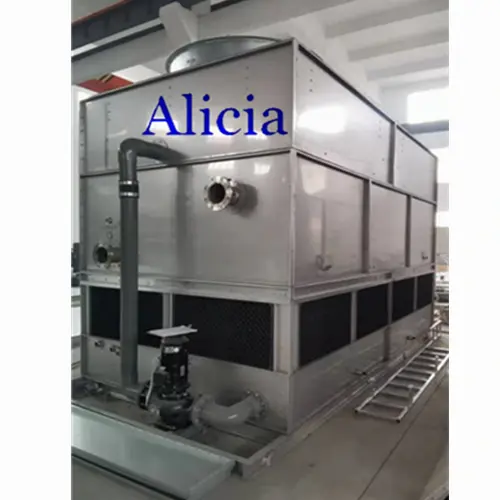 Why are closed-circuit cooling towers needed to make cheese?
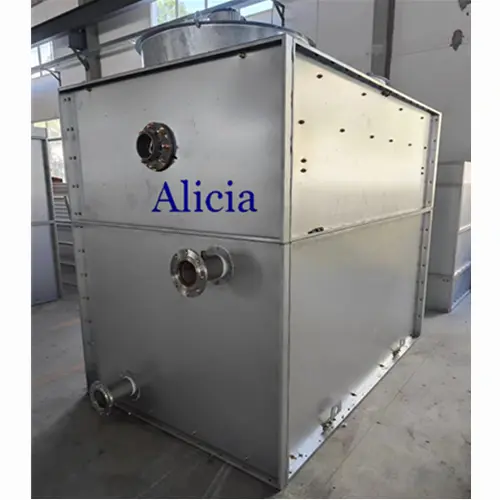 closed-circuit cooling tower systems for process cooling applications
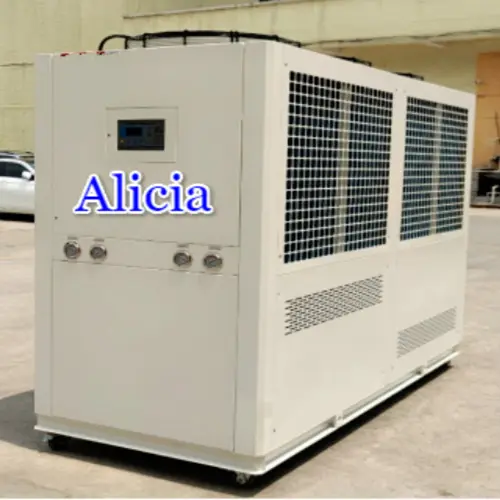 How are chillers used in the cosmetics manufacturing industry?
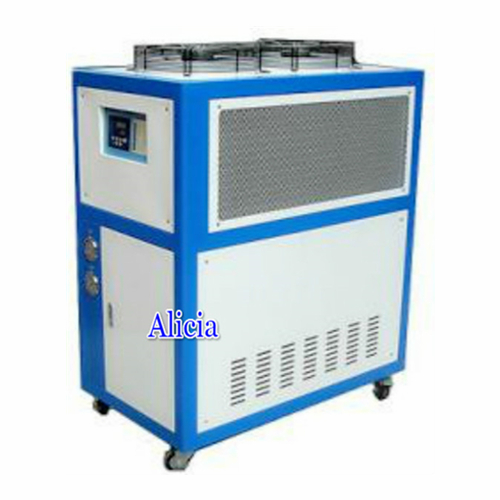 How are water chillers used in the soap manufacturing industry?


