I. Core Function:
After slaughter, poultry carcasses have high body temperature and rapid bacterial growth. Using a water chiller to produce low-temperature ice water quickly cools the carcass, locking in freshness and meeting food safety refrigeration standards, reducing weight loss and improving meat quality.
II. Common Temperature Control Standards
Pre-cooling tank water temperature: 0~4℃
Carcass final temperature requirements: Core temperature ≤7℃, internal organs ≤3℃
Outlet water setting: Chiller outlet water 2~3℃, suitable for rinsing and soaking pre-cooling processes
III. Three Major Application Scenarios & Workflow
1. Rapid Pre-cooling after Scalding (Most Mainstream)
After poultry slaughter, plucking, evisceration, and cleaning, they are sent to the pre-cooling tank.
The chiller produces low-temperature ice water at around 2℃, which is pumped into the pre-cooling tank for heat exchange.
The ice water continuously flows and washes the poultry, quickly removing residual heat from the surface and inside the body.
Warm water returns to the main unit for re-cooling, and the tank water temperature is locked at 0-4℃.
Pre-cooling time control: 40-60 minutes, after cooling is completed, the poultry is transferred and segmented.
2. Pre-cooling in an air-cooled tunnel: A chiller supplies water to the air-cooling units inside the tunnel, blowing out 2-5℃ low-temperature cold air. Poultry carcasses suspended on the production line pass through at a uniform speed. No direct airflow can damage the meat; uniform cooling is suitable for large-scale continuous production. Temperature is controlled throughout the process to prevent skin whitening and dryness of the meat.
3. Pre-cooling of by-products/offal: Hearts, livers, intestines, and other perishable offal are separately connected to small cold water circulation tanks. The water temperature is strictly controlled at 0-2℃ for rapid antibacterial action and extended shelf life.
IV. System Composition
Air-cooled chiller → Low-temperature insulated water tank → Corrosion-resistant circulating water pump → Pre-cooling tank heat exchange coil / air cooler → Return water circulation. Key configuration: Piping/heat exchange ends are made of 304 stainless steel, resistant to blood corrosion, easy to clean and disinfect.
V. Selection and Matching (Directly Apply)
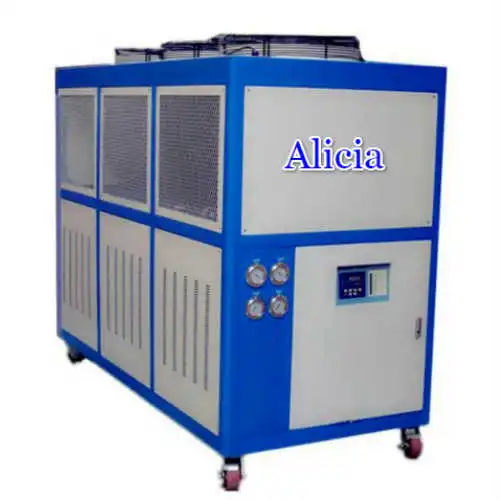
Daily slaughter volume under 5000 animals: 10HP air-cooled chiller
Daily slaughter volume 10,000-20,000 animals: 20HP-30HP
Daily slaughter volume over 30,000 animals: 50HP and above screw-type air-cooled chiller
VI. Industry Advantages
Fast cooling speed, significantly inhibiting the growth of harmful bacteria such as Salmonella
Less meat water loss, reducing weight loss and increasing profit margins
Precise and controllable water temperature, consistent product quality, meeting slaughterhouse quarantine standards
Air-cooled chiller do not require a cooling tower, and workshop installation is not limited by site water supply.
24/7 operation. Continuous operation for hours, suitable for uninterrupted operation of slaughtering production lines.
VII. Key differences between slaughtering and hatching/chicken house usage:
Lowest water temperature: Slaughtering pre-cooling 0-4℃, hatching 13-17℃, chicken house 18-22℃
Different media: Slaughtering mainly uses ice water immersion for heat exchange, while the other two primarily use air heat exchange.
Higher material requirements: Slaughtering environments require protection against blood, oil, and corrosion, necessitating stainless steel components.


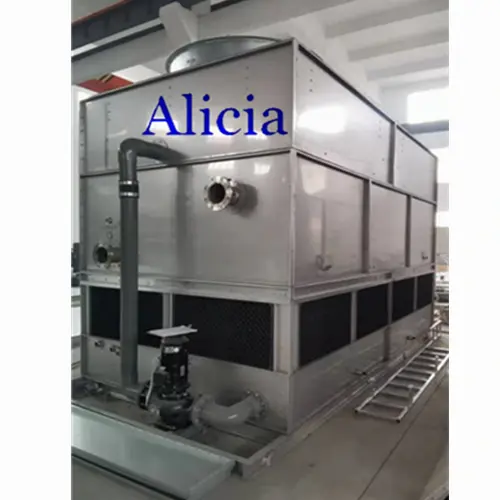 Why are closed-circuit cooling towers needed to make cheese?
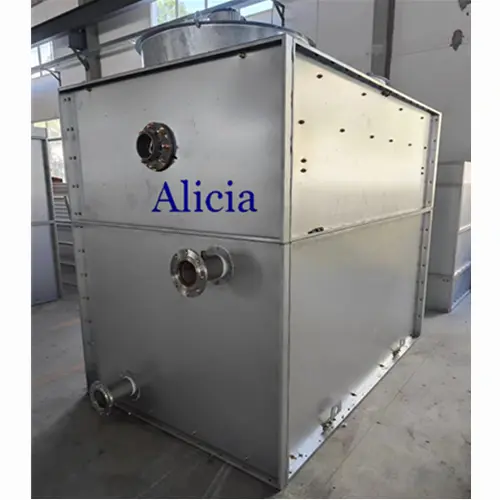 closed-circuit cooling tower systems for process cooling applications
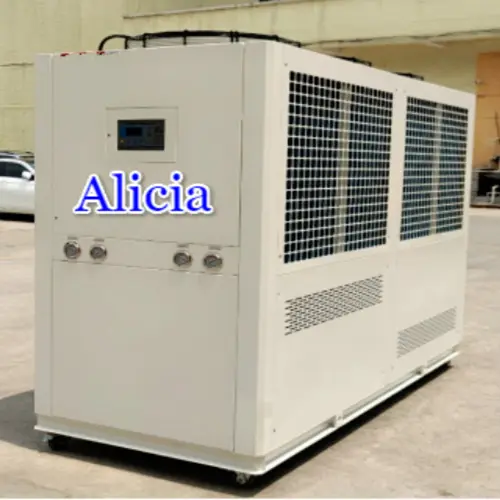 How are chillers used in the cosmetics manufacturing industry?


