In ice cream production, the core functions of industrial water chillers are to rapidly cool the ingredients, maintain a constant aging temperature, dissipate heat from the freezing machine/quick-freezing equipment, and stabilize the workshop and refrigerant temperatures. These functions directly determine the smoothness of the texture, output, and energy consumption.
I. Ice Cream Production Process (industrial water chiller Integration)
Ingredient Mixing → Sterilization → Homogenization → industrial water chiller Pre-cooling (4℃) → Aging (2–4℃, industrial water chiller maintains constant temperature) → Freezing (-5~-8℃, industrial water chiller dissipates heat from the main unit) → Filling → Hardening (-25~-40℃, industrial water chiller assists) → Refrigeration.
II. Detailed Explanation of Each Stage
1. Pre-cooling of Mixtures (After Sterilization)
After sterilization, the mixture temperature is approximately 65–85℃. It needs to be cooled to 4℃ within 15–30 minutes to prevent bacterial growth and the rise of milk fat.
1. 1. industrial water chiller Supply: 1-3℃ chilled water/ethylene glycol, rapidly heated via a plate heat exchanger with temperature control ±0.5℃ to ensure stable flavor.
2. Aging (Critical Stage):
The liquid mixture is held at a constant temperature of 2-4℃ for 4-12 hours: milk fat crystallizes, proteins hydrate, and viscosity increases, determining the smoothness and melt resistance of the ice cream.
The industrial water chiller operates at a constant temperature for 24 hours, with chilled water circulating through the aging tank jacket/coil to prevent temperature fluctuations that could lead to large ice crystals and a rough texture.
3. Freezer Cooling (Core of Continuous Production):
The freezer requires a temperature of -5~-8℃ for simultaneous churning and freezing, incorporating air to form fine ice crystals (<50μm)** and a fluffy texture.
The freezer compressor continuously releases heat, which is dissipated by the industrial water chiller (7-12℃ water intake) to the condenser, preventing high-pressure alarms, slowed freezing, and reduced production.
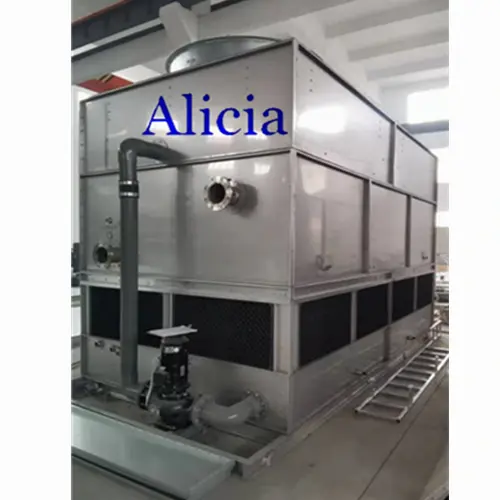
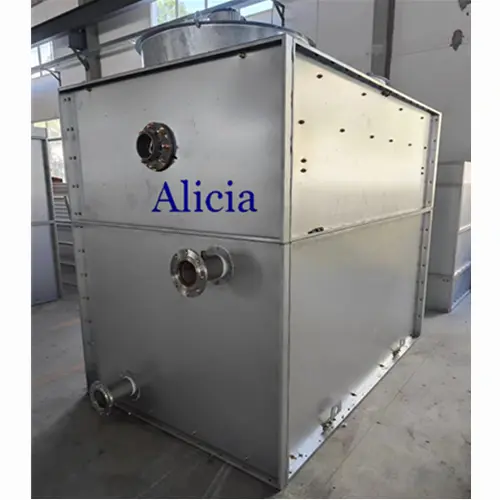
Air-cooled industrial water chillers are mostly used in small shops; water-cooled industrial water chillers + cooling towers are suitable for factories, providing stable heat dissipation and preventing production reduction in summer.
4. Hardening and Quick-Freezing:
After filling, rapid hardening at -25~-40℃ is required to fix the shape and prevent melting during transportation.
The industrial water chiller dissipates heat from the compressor in the quick-freezing tunnel/cold storage, ensuring low-temperature stability and shortening hardening time (approximately 30 minutes).
5. Workshop and Refrigerant Auxiliary Functions:
High temperatures in the workshop during summer can reduce the efficiency of the freezing machine. The industrial water chiller can pre-cool the workshop's air conditioning/fresh air, stabilizing the production environment.
Some processes use ethylene glycol (-10~-5℃) as a refrigerant; the industrial water chiller provides precise temperature control to prevent pipe freezing.
III. industrial water chiller Types and Selection (Commonly Used in the Ice Cream Industry)
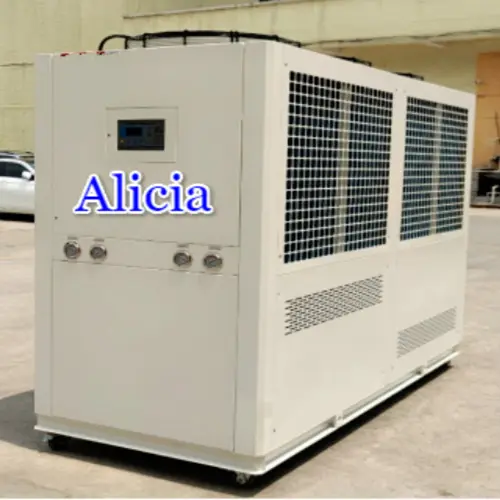
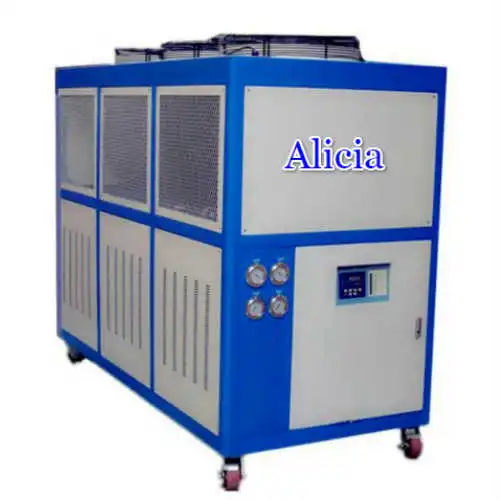
Air-cooled water chiller (5–20kW): Suitable for small shops/small lines; simple installation, no cooling tower required.
Open type Water-cooled chillers system (20–100kW): For medium to large-sized factories, equipped with a cooling tower, high COP, low energy consumption, and stable heat dissipation.
Low-temperature glycol industrial water chiller (-15~0℃): Dedicated for aging/freezing machines, anti-freezing, and precise temperature control.
Hygiene requirements: Parts in contact with water/materials are made of 304/316 stainless steel, easy to clean and antibacterial.
IV. Core Value (Why it's essential)
Quality: Stable low temperature → fine and uniform ice crystals, delicate texture, and good melt resistance.
Efficiency: Rapid precooling + constant temperature aging + freezing heat dissipation → continuous production, increased output, and reduced failures.
Cost: High-efficiency industrial water chiller + precise temperature control → energy consumption reduced by 30–50%, extended equipment life.
V. Common Configuration Example (500L/h Ice Cream Line)
Aging tank: 500L, jacketed with 2–4℃ chilled water, equipped with a 5kW air-cooled industrial water chiller.
Freezing machine: 300L/h, equipped with a 10kW water-cooled industrial water chiller + cooling tower, inlet water temperature 7–12℃.
Quick-freezing tunnel: equipped with a 15kW water-cooled industrial water chiller, ensuring stable operation at -35℃.



 Why are closed-circuit cooling towers needed to make cheese?
 closed-circuit cooling tower systems for process cooling applications
 How are chillers used in the cosmetics manufacturing industry?
 How are water chillers used in the detergent manufacturing industry?


