How should beekeeping equipment manufacturers choose suitable chillers?
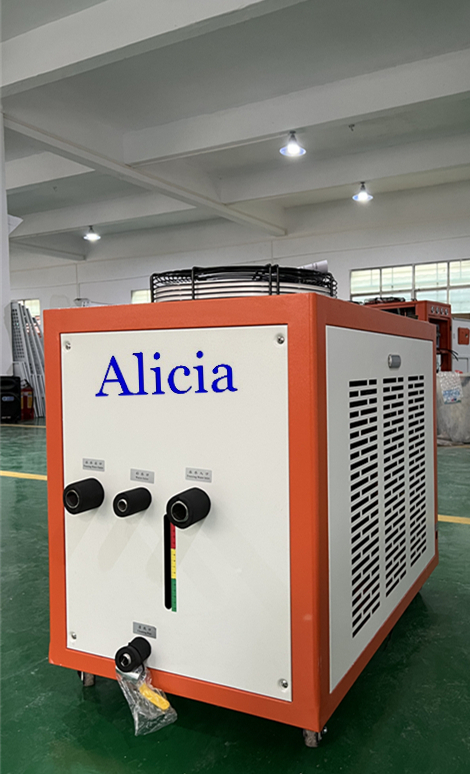
I. Determine the purpose of the chiller (to decide the model)
1. Primarily for cooling injection molding machines/molds (most common)
Production: Plastic foundation, frames, feeders, queen excluders, plastic beehives
Requirements: Stable water output, rapid cooling, durability
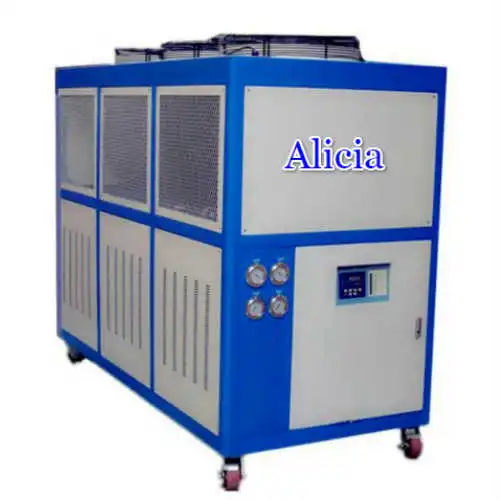
Recommendation: Industrial air-cooled chiller (no water tank required, simple installation)
2. For cooling bee product processing (honey concentration, royal jelly, beeswax)
Requirements: Precise temperature control, hygiene, stable low-temperature operation
Recommendation: Water-cooled chiller or constant-temperature chiller, temperature control ±0.5℃ is preferred
3. For cooling metal processing/welding/electroplating
Requirements: High flow rate, corrosion resistance
Recommendation: Chiller with stainless steel water tank + corrosion-resistant piping
II. Select cooling capacity based on equipment power (simplest formula)
General reference for injection molding machine chiller pairings:
50~80 ton injection molding machine → 3HP~5HP chiller
90~120 ton → 5HP~8HP
150~200 tons
→ 10HP~15HP
Multiple machines → Add up the total power and then increase by 10%
In short: A 3~5HP injection molding machine is generally a safe bet.
III. Environment and Installation Conditions (Determining Air-Cooled/Water-Cooled)
1. Small workshop, no cooling tower → Choose air-cooled chiller
Advantages: Ready to use immediately upon connection to electricity, no water tank or tower required
Disadvantages: Slightly reduced efficiency in high-temperature summer environments
Suitable for: Most small and medium-sized beekeeping equipment factories
2. Large workshop, multiple machines, very hot in summer → Choose water-cooled chiller
Advantages: More stable cooling, more energy-efficient, longer lifespan
Disadvantages: Requires a water tower or tank
Suitable for: Large-scale factories, 24-hour production
IV. Four Points to Pay Special Attention to in the Beekeeping Equipment Industry
1. Clean water quality is essential to prevent mold clogging. Beekeeping molds have small water channels; recommended:
A chiller with built-in filter
Or an external water filter to prevent mold clogging, uneven cooling, and product burr deformation.
2. Stable Temperature Control is Essential
Foundation materials and plastic queen excluders require high dimensional accuracy:
Temperature control accuracy of ±1℃ is sufficient. For high-requirement beekeeping equipment, choose models with ±0.5℃ high precision.
3. Corrosion and Rust Prevention are Crucial
The workshop contains honey, beeswax, pollen, and is in a humid environment:
Stainless steel water tanks are preferred. Powder-coated outer shells prevent rust, leaks, and water pollution.
4. 24-Hour Continuous Operation Capability
Beekeeping equipment orders are concentrated during peak season, often requiring overtime production:
Choose compressors from brands like Copeland, Danfoss, and Hitachi.
Durable fans and water pumps are essential to avoid significant losses from downtime during peak season.
V. Simple and Direct Selection Scheme (Can be provided directly to customers)
Small Factory (1-2 injection molding machines)
Model: 5HP air-cooled industrial chiller
Advantages: Small footprint, plug-and-play, high cost-effectiveness
Medium Factory (3-5 injection molding machines)
Model: 10HP-15HP air-cooled or water-cooled
Advantages: One machine supports multiple molds, energy-saving and stable
Large Factory + Bee Product Processing
Model: 20HP or higher water-cooled chiller + cooling tower
Advantages: 24-hour stability, precise temperature control, suitable for honey concentration
VI. Last 3 Tips to Avoid Pitfalls
Don't buy a chiller that's too small to save money → Slow mold cooling, more defective products
Don't buy a generic compressor → Prone to breakdowns in summer, troublesome repairs
Always ask about the water pump flow rate and head → Insufficient flow rate is a waste of money
If you'd like, we can provide customized solutions based on your demands:
Number of injection molding machines
Tonnage
Workshop environment (indoor/outdoor)
Whether bee product processing is required
we will directly calculate the precise model and cooling capacity for you.

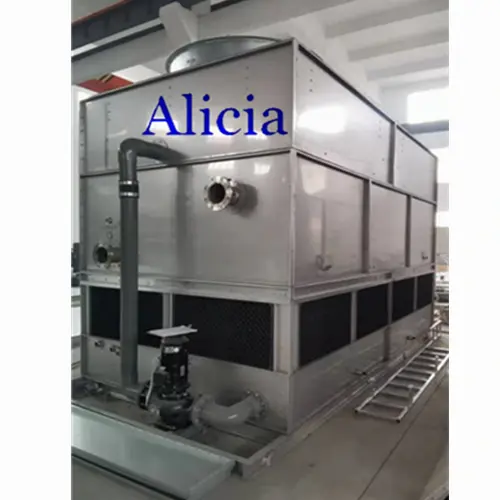 Why are closed-circuit cooling towers needed to make cheese?
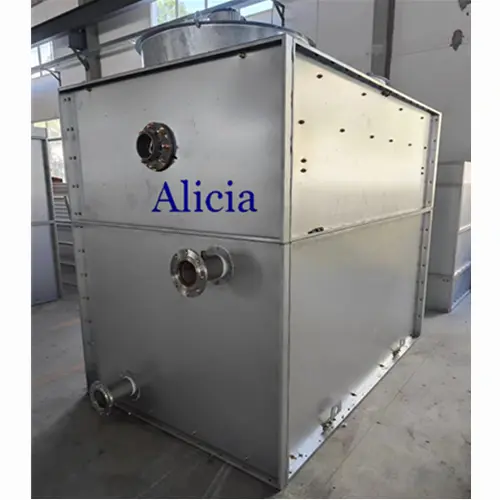 closed-circuit cooling tower systems for process cooling applications
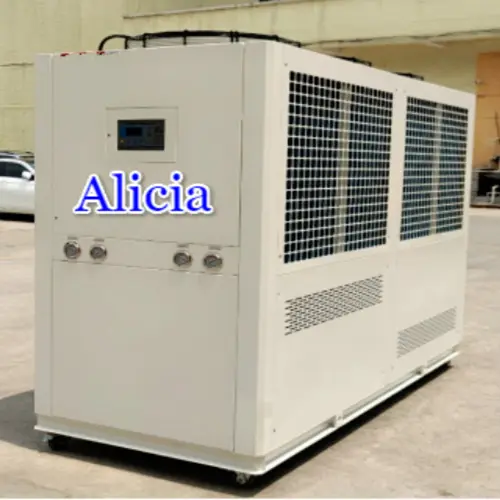 How are chillers used in the cosmetics manufacturing industry?
 How are water chillers used in the detergent manufacturing industry?



