The beekeeping equipment manufacturing and sales industry primarily needs chillers for three core applications: equipment manufacturing, supporting bee product processing, and high-end apiary temperature control. They are not directly used for daily beekeeping.
I. Use in the manufacture of beekeeping equipment (primary reason)
1. Beekeeping equipment extensively uses materials such as plastics, metals, and wood, requiring cooling and temperature control during production.
2. In the injection molding/extrusion of plastic beekeeping equipment, producing plastic frames, foundations, feeders, queen excluders, and beehive accessories, the injection molding machine and extruder molds require rapid cooling with a chiller:
Shortening the molding cycle and increasing output
Preventing product deformation, shrinkage, and surface roughness
Ensuring dimensional accuracy (e.g., the precision of foundation cells).
3. Temperature control for metal processing/welding/electroplating of metal beekeeping equipment, galvanized iron wire, queen excluders, and honey extractor components:
Welding cooling to prevent deformation
Electroplating bath temperature control to ensure uniform and corrosion-resistant plating
Wood/composite material processing cooling: Cooling the cutting tools and materials during beehive board cutting, grinding, and gluing to prevent cracking and heat deformation.
II. Supporting Functions for Bee Product Processing (often used concurrently with or serving apiaries)
1. Honey Concentration/Refining: After heating and concentrating, honey must be rapidly cooled to a low temperature (40–50℃) to prevent nutrient damage, color darkening, and the formation of hydroxymethylfurfural (HMF). The honey refining tank's jacketed water cooling system requires an external chiller to provide a stable low-temperature water source.
2. Low-Temperature Processing of Royal Jelly, Bee Pollen, and Beeswax: Royal jelly is refrigerated and freeze-dried.
3. Rapid Cooling After Beeswax Melting, Purification, and Shaping to Prevent Oxidation and Spoilage: Honey is filled/stored at low temperatures; cooling of conveying pipelines extends shelf life, prevents fermentation, and prevents uneven crystallization.
III. Applications in High-End/Large-Scale Beekeeping Temperature Control Equipment (R&D/Sales of Intelligent Beekeeping Tools)
Constant Temperature Beehive Water-Cooling System: In summer high temperatures (>35℃):
Built-in water-cooling coils/heat absorbers in the beehive, connected to an external chiller for circulating cooling.
Maintaining the internal temperature of the beehive at 32–35℃ (optimal temperature for brood rearing).
Preventing beeswax softening, hive collapse, bees leaving the comb, and absconding.
Environmental temperature control in apiaries, greenhouse pollination, indoor beekeeping, and constant temperature control in breeding laboratories.
IV. Business Extension: Selling chillers as complementary beekeeping equipment.
Supplying complete sets to large apiaries, pollination companies, and breeding bases: beehive + temperature control + chiller.
For export overseas (tropical/subtropical), the water-cooled beehive system is a high-value-added solution.
Summary: The beekeeping equipment manufacturing and sales industry needs chillers, essentially because:
1. Production end: Cooling is necessary for manufacturing plastic/metal beekeeping tools.
2. Processing end: Honey/Royal jelly/ Beeswax requires low-temperature stability.
3. Product side: R&D/sales of intelligent temperature-controlled beehives, forming a complete solution integrating equipment and temperature control.

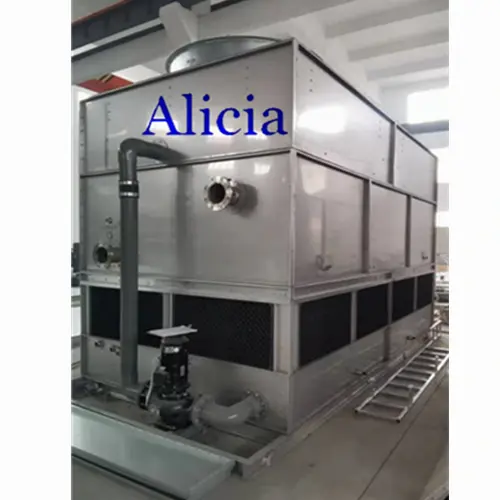 Why are closed-circuit cooling towers needed to make cheese?
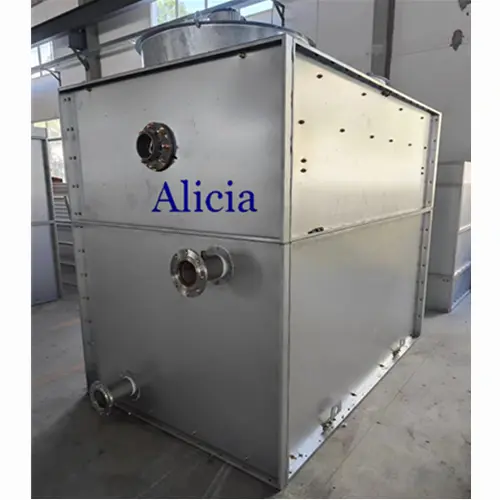 closed-circuit cooling tower systems for process cooling applications
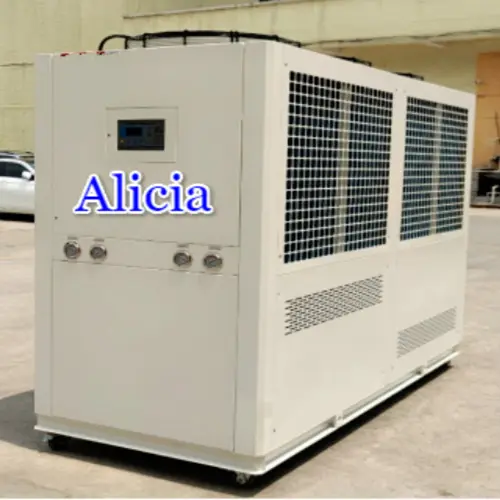 How are chillers used in the cosmetics manufacturing industry?
 How are water chillers used in the detergent manufacturing industry?



