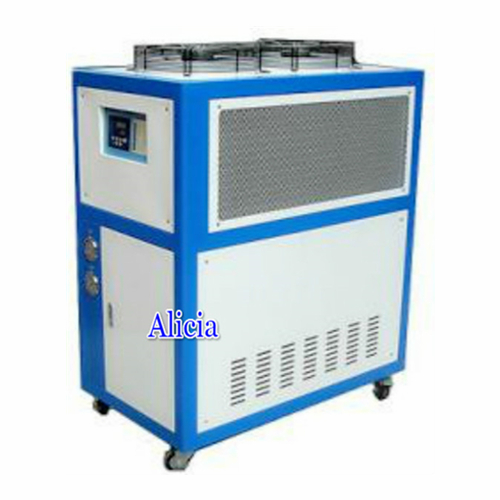
1. Cooling capacity:
Accurately calculate the heat generated by printing and printing equipment during operation, which can generally be estimated based on factors such as the power of the equipment, operating time, and ambient temperature. For example, if the power of the printing machine is 10kW, the heat generated during operation is assumed to be 30% of the power, that is, 3kW. Considering a certain margin, such as an increase of 20%, a
printing industry air cooled and cooling chiller with a cooling capacity of at least 3.6kW needs to be selected. In addition, if there are multiple devices in the workshop that need to be cooled, the heat generated by all devices should be added to determine the total cooling capacity requirement.
Safety performance, environmental performance.2. Cooling method:
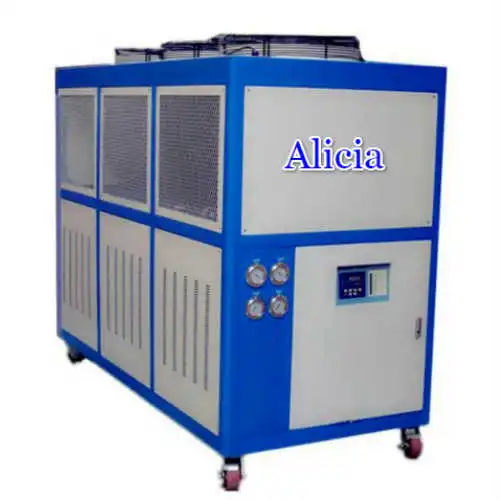
Air-cooled: simple structure, easy installation, no need to equip water towers and complex cooling water circulation systems, suitable for workshops with limited space and inconvenient water sources. However, the cooling efficiency is relatively low, and the cooling effect may be affected to a certain extent when the ambient temperature is high. It is suitable for occasions with small cooling capacity requirements.
Water-cooled: high cooling efficiency, can take away a lot of heat in a short time, suitable for printing and printing equipment with high cooling speed requirements and large cooling capacity requirements. However, a stable water source and supporting cooling water pipeline system are required, and the cooling tower and cooling water need to be regularly maintained to prevent scaling and clogging.
3. Temperature control accuracy:
The printing and printing industry has high requirements for temperature control accuracy. For example, the nozzles of some digital printers need to control the temperature within an accuracy range of ±1℃ or even higher to ensure the stability and accuracy of inkjet. Therefore, it is necessary to choose a printing industry air cooled and cooling chiller with a high-precision temperature control system, such as products with intelligent thermostats, which can accurately control the water temperature to fluctuate around the set value.
4. Flow and pressure:
The water flow and pressure of the printing industry air cooled and cooling chiller must be able to meet the cooling needs of printing and printing equipment. Different equipment has different requirements for water flow and pressure. For example, large printing presses may require a larger water flow and higher pressure to ensure that the cooling medium can be fully circulated to each part that needs cooling. When choosing a printing industry air cooled and cooling chiller, choose a suitable water pump according to the requirements of the equipment to provide sufficient flow and pressure.
5. Noise level:
Printing and printing workshops usually require a relatively quiet working environment to avoid the impact of noise on the physical and mental health and work efficiency of operators. Therefore, a printing industry air cooled and cooling chiller with a low noise level should be selected. Generally speaking, the noise of
printing industry air-cooled chillers is relatively large. When choosing, pay attention to its noise index and try to choose products with an operating noise below 60 decibels.
6. Maintenance:
Choosing a printing industry air cooled and cooling chiller with easy maintenance can reduce the cost of use and downtime. For example, the structural design of the equipment should be convenient for maintenance and replacement of parts, and accessories should be easy to purchase. At the same time, it has good self-diagnosis and protection functions, and can detect and handle faults in time, such as compressor overcurrent protection, flow alarm, overtemperature alarm, etc.
7. Brand and after-sales service:
Choose a printing industry air cooled and cooling chiller from a well-known brand, whose product quality and performance are usually more guaranteed, and it has a complete after-sales service system that can provide timely technical support and maintenance services. You can learn about the reputation and credibility of different brands by consulting product information, consulting other users, or referring to industry recommendations.
8. Safety performance:
The printing industry air cooled and cooling chiller should have good safety performance, such as electrical safety protection, refrigerant leakage protection, etc. Ensure that the equipment will not pose a safety threat to personnel and equipment during operation. For example, the equipment should have functions such as grounding protection and leakage protection to prevent electric shock accidents.
9. Environmental performance:
Preferably choose printing industry air cooled and cooling chillers that use environmentally friendly refrigerants, such as R410A, R134a, etc. These refrigerants do not damage the ozone layer and have low greenhouse gas emissions, which meet environmental protection requirements. At the same time, the energy consumption of the printing industry air cooled and cooling chiller should also be as low as possible to reduce operating costs and environmental impact.

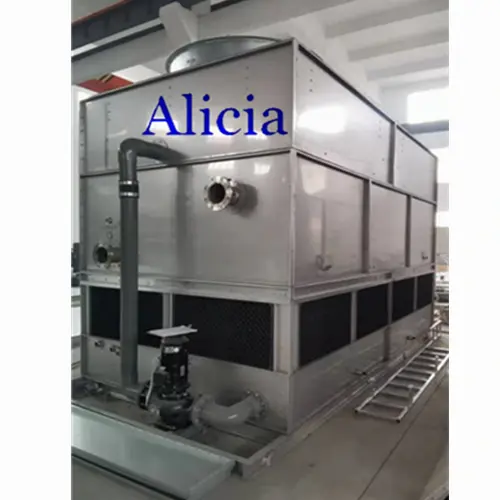 Why are closed-circuit cooling towers needed to make cheese?
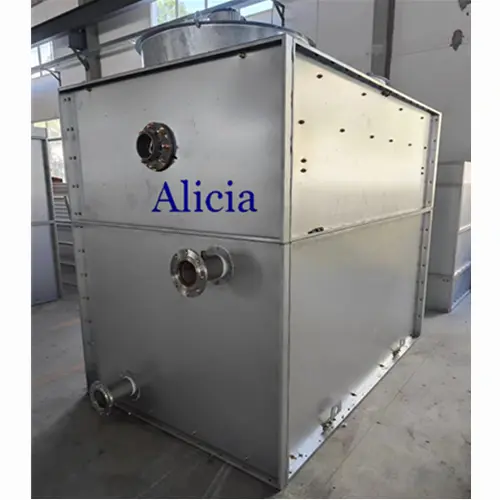 closed-circuit cooling tower systems for process cooling applications
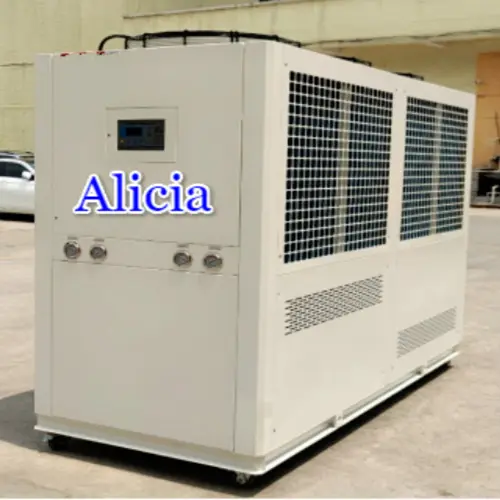 How are chillers used in the cosmetics manufacturing industry?
 How are water chillers used in the detergent manufacturing industry?



