We use cookies to improve your online experience. By continuing browsing this website, we assume you agree our use of cookies.

What are the maintenance considerations for MRl chillers?

Views : 2916
Author : Alicia Import and Export Trade Co., Ltd
Update time : 2025-03-12 15:50:32

chiller for MRI system, MRI equipment chillers
Regular Inspection of Components for MRI chillers

  • Refrigeration System: Regularly check the refrigerant lines for any signs of leakage, such as oil stains or frost formation. Inspect the compressor for unusual noises, vibrations, and ensure proper lubrication. Examine the condenser and evaporator coils for dirt, dust, and damage. Clean the coils if necessary to maintain good heat transfer efficiency. 
  • Cooling Water System: Check the water pumps for proper operation, including their rotation and water flow. Inspect the pipes for leaks and ensure that the water filters are clean to prevent clogging. Monitor the water quality, including its pH level, hardness, and conductivity, and perform water treatment as required to prevent scale formation and corrosion.
  • Electrical System: Inspect the electrical connections of all components, including the compressor, fans, and control circuits, to ensure they are tight and free from corrosion. Check the fuses and circuit breakers for any signs of overheating or damage. Test the voltage and current levels to ensure they are within the normal operating range.


Sensor Calibration and Verification for MRI chillers

  • Temperature Sensors: Regularly calibrate the temperature sensors to ensure accurate temperature measurement and control. The calibration should be performed according to the manufacturer's instructions, usually using a precision temperature - measuring device. Verify that the sensors are providing consistent and accurate readings throughout the operating range.
  • Pressure Sensors: Calibrate the pressure sensors to ensure proper monitoring of the refrigerant and cooling water pressure. Check for any signs of sensor drift or inaccuracy, which could lead to incorrect pressure - related control actions.


Filter Replacement and Cleaning for MRI chillers

  • Air Filters: Clean or replace the air filters in the chiller regularly, typically every 1 - 3 months, depending on the operating environment. Dirty air filters can restrict the airflow, reduce the cooling efficiency, and cause the chiller to work harder, increasing energy consumption and the risk of component overheating.
  • Liquid Filters: The filters in the cooling water and refrigerant circuits should also be inspected and cleaned or replaced as needed. These filters prevent debris, dirt, and other particles from entering the system and causing damage to the components, such as clogging the nozzles or wearing out the pumps.


Lubrication and Fluid Checks for MRI chillers

  • Compressor Lubrication: Check the oil level and quality of the compressor lubricant regularly. The oil should be changed according to the manufacturer's recommended intervals, usually every 1 - 2 years or as specified based on the operating hours. Use the correct type of lubricant recommended by the compressor manufacturer to ensure proper lubrication and cooling of the compressor's moving parts.
  • Cooling Fluid: Monitor the level and quality of the cooling fluid in the chiller. Top up the fluid as necessary and perform a complete fluid change at the recommended intervals. The cooling fluid should have the proper anti - freeze and anti - corrosion properties to protect the system from freezing and rusting.


Software and Control System Updates  for MRI chillers

  • Firmware Updates: Keep the chiller's control system firmware up to date. Manufacturers often release firmware updates to improve the performance, stability, and functionality of the chiller. These updates may include bug fixes, enhanced control algorithms, and new features that can optimize the chiller's operation.
  • Control System Settings: Regularly review and verify the control system settings to ensure they are optimized for the specific operating conditions of the MRI system. Adjust the setpoints, alarms, and other parameters as needed based on the actual performance and requirements of the chiller.


Record - Keeping and Documentation  for MRI chillers

  • Maintenance Logs: Keep detailed records of all maintenance activities, including the date of maintenance, the tasks performed, the components inspected or replaced, and any issues found and resolved. This information can be used to track the chiller's maintenance history, identify trends in component failures, and plan for future maintenance and upgrades.
  • Equipment Documentation: Maintain a complete set of equipment documentation, including the chiller's operating manual, technical specifications, maintenance instructions, and any relevant warranties or service agreements. This documentation serves as a reference for maintenance personnel and can be helpful in troubleshooting problems and making informed decisions about the chiller's maintenance and repair.
Related News
Read More >>
Why are closed-circuit cooling towers needed to make cheese? Why are closed-circuit cooling towers needed to make cheese?
May .29.2026
Cheese factories use closed-circuit cooling towers primarily for hygiene and safety, precise temperature control, and stable operation. Open-circuit towers cannot meet the food-grade sterility and temperature control requirements.

closed-circuit cooling tower systems for process cooling applications closed-circuit cooling tower systems for process cooling applications
May .28.2026
Industrial closed‑circuit cooling tower systems are ideal for applications requiring fluid purity, precise temperature control, and reduced water/chemical usage—especially in chemical, food, pharmaceutical, manufacturing, and data center industries.
How are chillers used in the cosmetics manufacturing industry? How are chillers used in the cosmetics manufacturing industry?
May .16.2026
The core functions of chillers in the cosmetics industry are precise temperature control, rapid cooling, and constant temperature preservation, covering four major stages: emulsification/reaction, extraction, filling, and equipment cooling. These directly determine product activity, stability, and production efficiency.
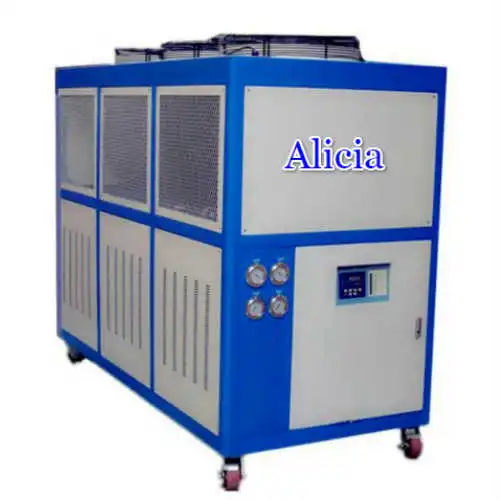
How are water chillers used in the detergent manufacturing industry? How are water chillers used in the detergent manufacturing industry?
May .16.2026
The core functions of chillers in detergent production are precise temperature control, ensuring reaction stability, cooling materials, protecting equipment, and stabilizing formulations. They cover the entire process from synthesis, ingredient mixing, homogenization to filling/molding, directly determining product stability and yield.
pop_close
pop_main
Stay In The Know
Enter your email to hear from us about Product list, Latest Products and Customer application examples!