The core functions of water chillers in perfume production are precise temperature control, low-temperature freezing filtration, fragrance locking and anti-volatile properties, and ensuring batch stability, covering the entire temperature control process from aging and freezing filtration to bottling.
I. Core Applications and Functions
1. Fragrance Aging (Constant Temperature Below 13℃)
The mixed fragrance concentrate needs to be left to stand for several weeks in an environment of **≤13℃** to allow the aroma molecules to fully integrate and balance, preventing the loss of volatile fragrance components (such as top notes of citrus/floral) due to high temperatures.
The industrial water chiller provides 5–10℃ cold water to the aging tank jacket/coil, with a temperature control accuracy of ±0.5℃, ensuring stable aroma layers and batch consistency.
2. Freezing Filtration (Low Temperature Around 0℃)
The perfume mixture (fragrance + alcohol + water) is cooled to 0~5℃, causing insoluble impurities (waxes, resins, undissolved fragrances) to precipitate out at low temperatures, preventing turbidity after filtration at room temperature.
The industrial water chiller, equipped with a 316L stainless steel refrigeration tank and titanium coils, maintains a constant temperature of 0℃ throughout the filtration process, ensuring more thorough impurity removal and resulting in a long-lasting clear and transparent perfume.
3. Mixing and Dilution (Low Temperature to Prevent Volatilization)
When diluting fragrance with high-purity alcohol (95%), the temperature is controlled at 5–15℃ to inhibit alcohol evaporation and aroma loss, improving aroma retention and blending precision.
The industrial water chiller is connected to the mixing tank jacket to quickly remove frictional heat during mixing, preventing localized overheating that could lead to component deterioration or discoloration.
4. Secondary Aging and Settling (Constant Temperature and Light Protection)
After filtration, the perfume needs to be aged for several weeks in a **constant temperature environment of 10–15℃** to allow trace components to fully react and the aroma to become more rounded.
The industrial water chiller maintains a constant temperature in the storage tank to prevent temperature fluctuations from causing sedimentation, turbidity, and aroma changes.
5. Filling and Storage (Temperature Control to Prevent Deterioration)
The filling line is temperature-controlled at 15–20℃ to prevent perfume expansion and leakage, alcohol evaporation, and to ensure filling accuracy and stable bottle pressure.
The finished product warehouse is kept at a constant temperature of 18–22℃, with industrial water chillers working in conjunction with central air conditioning to extend the perfume's shelf life and stabilize its aroma quality.
II. industrial water chiller Selection Considerations
Temperature Range: Must cover **-5℃~20℃** to meet the requirements of freeze filtration (0℃) and aging (10℃).
Material: Parts in contact with perfume are made of 316L stainless steel, corrosion-resistant and meeting food-grade/cosmetic-grade hygiene standards.
Temperature Control Accuracy: ±0.3~±0.5℃, ensuring aroma stability and batch consistency.
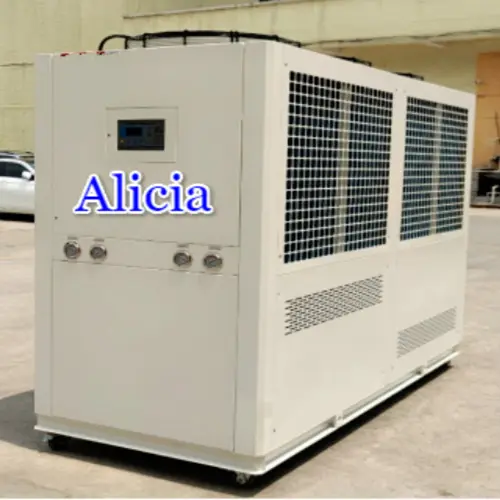
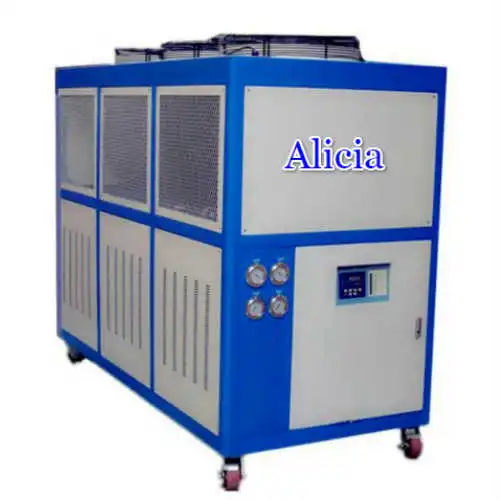
Cooling Method: Air-cooled systems are more suitable for perfume workshops (clean, no cooling tower, small footprint).
III. Key Value
Quality Assurance: Low-temperature fragrance locking and impurity removal result in clear, transparent perfume with a pure and long-lasting aroma.
Cost optimization: Reduce fragrance volatilization loss and improve raw material utilization; stabilize batches and reduce rework rates.
Safety and compliance: Control temperature to reduce alcohol vapor concentration, reduce fire risk, and comply with cosmetic production safety regulations.
IV industrial water chillers are used in all aspects of perfume production:
Fragrance Blending Cooling:
Cooling the mixture of fragrances, alcohol, and solvents during stirring inhibits alcohol evaporation and aroma loss, preventing spoilage at high temperatures.
Low-Temperature Freezing Aging:
Allowing the blended perfume concentrate to stand at a constant low temperature allows the aroma to blend harmoniously, enhancing its longevity.
Low-Temperature Freezing Filtration (Core Process):
Cooling removes waxes and flocculent impurities from fragrances, resulting in a clear and bright perfume that remains clear and does not separate over time.
Essential Oil Extraction Cooling:
Temperature control during the distillation/extraction of floral and plant essential oils preserves their natural aroma and does not damage the fragrance components.
Reaction Kettle/Emulsification Pot Temperature Control:
Temperature control during the reaction of perfume base, hydrosol, and fragrance concentrate ensures precise and stable formula proportions.
Cleanroom Temperature Control:
Cooling and dehumidifying the production workshop and aseptic filling room prevents high temperatures from affecting perfume quality.
Filling Line Cooling:
Maintaining a stable low-temperature solution before filling reduces liquid expansion and overflow, ensuring more standardized filling volumes. Semi-finished product constant temperature storage: Low-temperature storage of intermediate liquids delays aroma deterioration and maintains consistent batch taste and aroma.
Fragrance spray and car perfume cooling and setting:
Cooling and setting the finished product stabilizes the concentration and prevents high-temperature expansion and leakage.
Laboratory sample fragrance blending and temperature control:
Developing a constant temperature environment for fragrance blending allows for precise replication of aromas, ensuring consistency with bulk production.
V Common industry water temperatures:
Freezing filtration: 0~5℃
Aging and maturation: 8~12℃
Blending cooling: 10~18℃



 Why are closed-circuit cooling towers needed to make cheese?
 closed-circuit cooling tower systems for process cooling applications
 How are chillers used in the cosmetics manufacturing industry?
 How are water chillers used in the detergent manufacturing industry?


